Are Sweepstakes Legal in 2026? What Entrants and Brands Need to Know
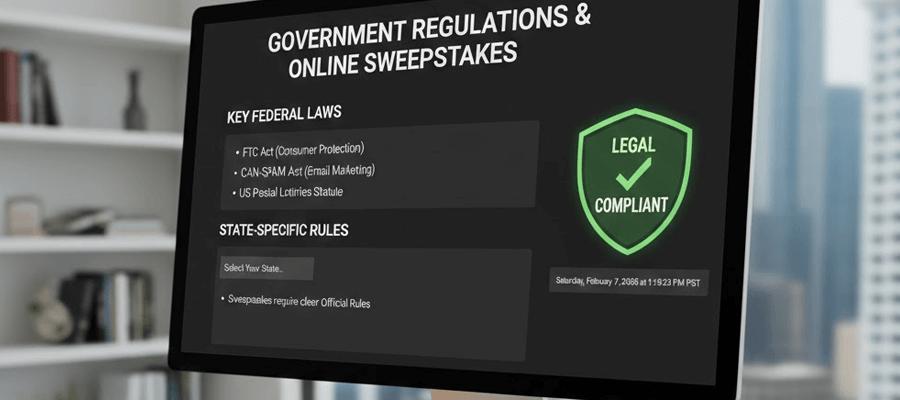
Sweepstakes are still legal in 2026, but the rules surrounding them have become stricter and more clearly enforced. For participants, understanding legality helps you avoid scams and misleading promotions. For brands, compliance is essential to avoid fines, takedowns, or legal action.
This guide explains how sweepstakes remain legal, what laws apply today, and what red flags to watch for as an entrant.
The Core Legal Principle: No Purchase Necessary
At the heart of sweepstakes law is one non-negotiable rule: no purchase or payment may be required to enter. This rule exists to separate sweepstakes from illegal lotteries.
If a promotion involves chance, a prize, and payment, it becomes a lottery. Most private companies are not allowed to run lotteries, which is why legitimate sweepstakes always offer a free method of entry.
Some giveaways may encourage purchases or subscriptions, but they must clearly provide an alternative free entry method with equal odds of winning.
Sweepstakes vs Contests vs Lotteries
Understanding the difference between these three terms helps clarify legality.
Sweepstakes are based purely on chance. Winners are chosen randomly, and no skill or payment is required.
Contests are skill-based. Winners are judged based on creativity, knowledge, or performance. Because skill is involved, purchases may sometimes be allowed.
Lotteries involve chance and payment. These are heavily regulated or illegal for private businesses in many countries.
Legitimate promotions clearly state which category they fall under in their official rules.
Geographic and Age Restrictions
Sweepstakes laws vary by country, state, and even province. As a result, most giveaways include geographic restrictions to remain compliant.
Common eligibility requirements include:
- Minimum age limits (usually 18 or older)
- Residency requirements
- Exclusion of employees or affiliates of the sponsor
If eligibility rules are missing or vague, that’s often a sign the giveaway was not reviewed for legal compliance.
Privacy and Data Protection in 2026
Modern sweepstakes must comply with strict data protection laws such as GDPR in Europe and CCPA or CPRA in parts of the United States.
This means organizers are required to:
- Explain how personal data will be used
- Limit data collection to what’s necessary
- Allow users to request deletion of their data
Transparent privacy practices are now a strong indicator of a legitimate giveaway.
What Makes a Sweepstakes Legitimate
Legal sweepstakes consistently provide clear documentation. You should always be able to find:
- Official rules
- Prize descriptions and values
- Entry deadlines
- Winner selection methods
- Sponsor contact details
Directories that list verified giveaways make it easier to identify promotions that follow these standards.
—
TL;DR: Sweepstakes Legality in 2026
Sweepstakes are legal in 2026 when they offer free entry, clearly disclose rules, respect privacy laws, and avoid requiring payment. Any giveaway that hides its terms or asks for money should be avoided.